The 5 Best AI Apps to Study and Summarise Notes in 2026
The 'AI for studying' lists doing the rounds are full of desktop websites. These five are apps you can carry on your phone, which is where studying actually happens, on the bus and in the library. They cover three different jobs: summarising your own notes, solving a specific problem and turning the syllabus into active revision. Data from Google Play Spain.
AI apps for summarising notes and revising
The key difference between them is where the information comes from. Gemini Notebook answers only from the documents you upload and cites the page; general chatbots answer from what they learned on the internet and can be wrong while sounding certain. For studying, that distinction changes everything.
Top pick

Gemini Notebook
Google · Free (with purchases) · 10M+
Best for your own notes
4.8
290K reviews
TopApps analysis
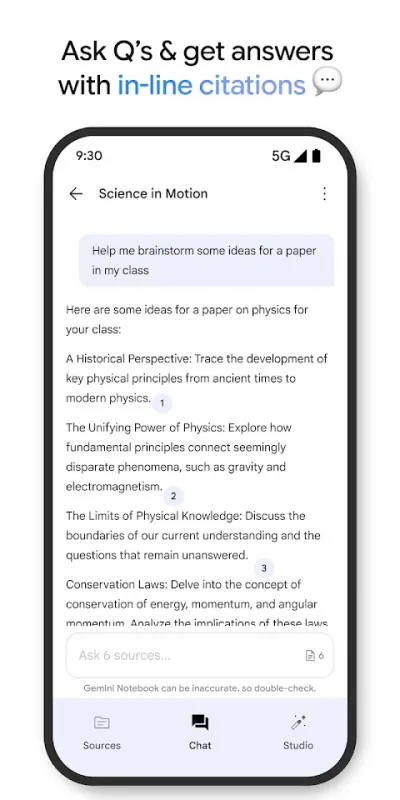
Answers only from the documents you upload and cites the page each fact comes from.
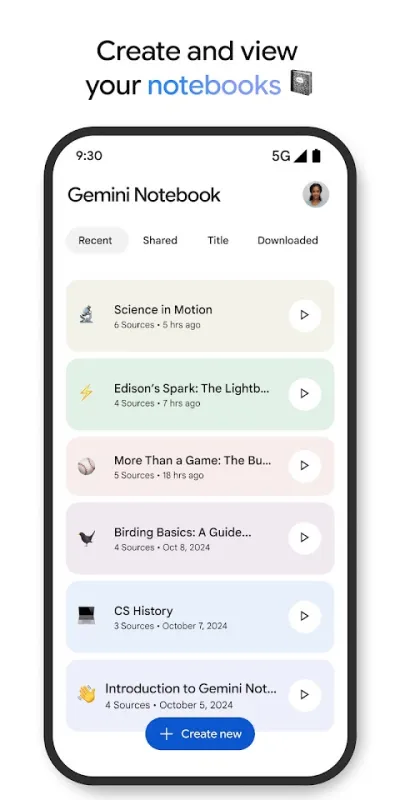
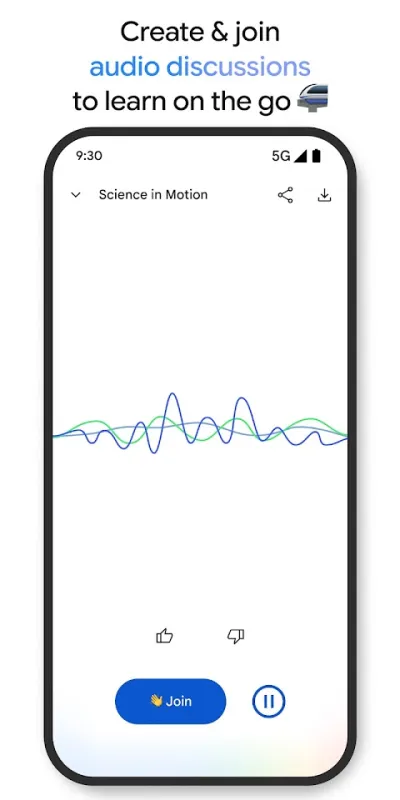
Formerly NotebookLM. You upload your own notes — PDFs, documents, even videos — and it answers using only what's in them, citing the page each statement comes from. That restriction is its big advantage over a general chatbot: it doesn't make up what isn't there. It also turns your notes into an audio summary with two voices in conversation.
Pros
- Answers only from your documents and cites the source
- Turns your notes into an audio summary
- Generates study guides and outlines automatically
Cons
- No use for questions outside your documents
- The conversational audio only works well in English
- Needs a connection for everything

Gauth: amigo de estudio con IA
GauthTech · Free (with purchases) · 100M+
Best for problem sets
4.7
1.9M reviews
TopApps analysis
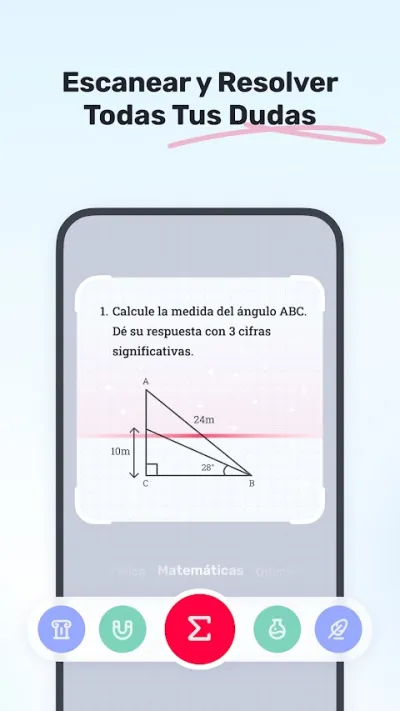
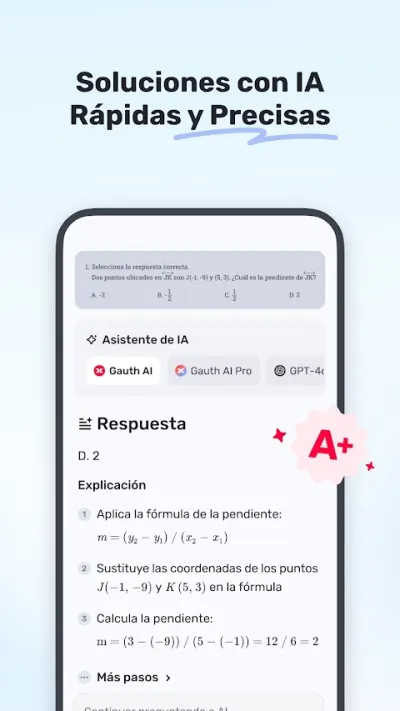
Solves the problem from a photo of the question and explains the working step by step.
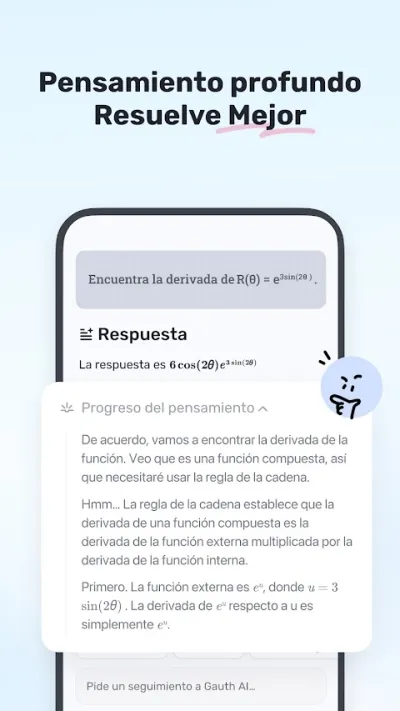
Gauth solves exercises from a photo of the question and, more importantly, explains the reasoning behind each step. It covers maths, physics, chemistry and biology. It's by far the most popular app in its category, and also the one that demands the most self-discipline: copying the answer and skipping the reasoning is tempting, and it's exactly what you should avoid.

Pros
- Explains the method step by step, not just the answer
- Covers sciences as well as maths
- Reads handwritten questions with good accuracy
Cons
- Invites copying instead of understanding
- Unlimited explanations are paid
- Gets long or ambiguous questions wrong

Photomath: Resolver Matemáticas
Google LLC · Free (with purchases) · 100M+
Best for maths
4.6
3.1M reviews
TopApps analysis
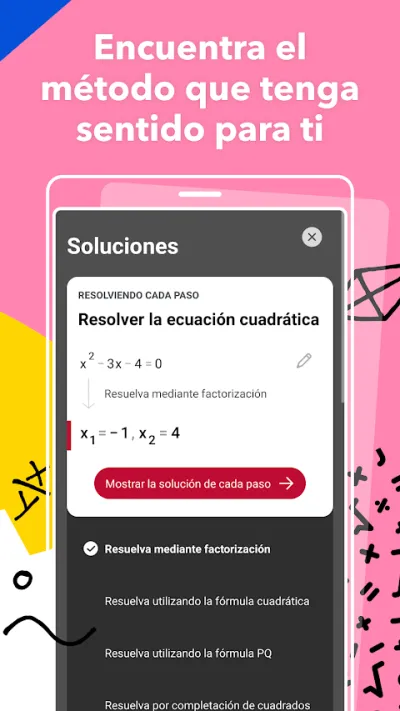
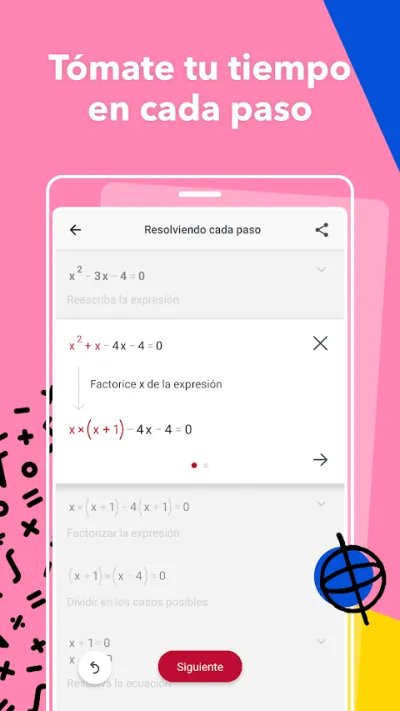
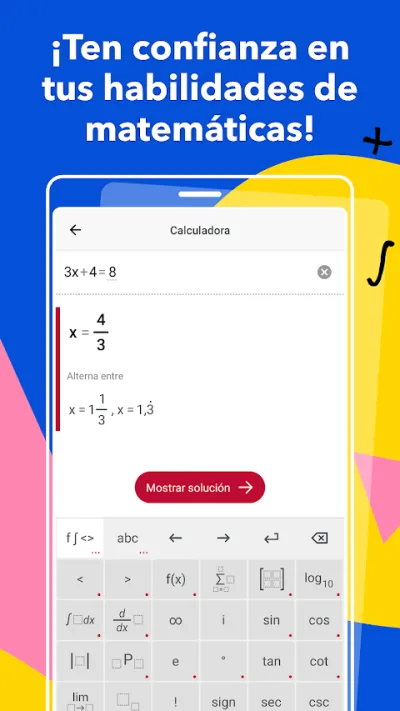
The benchmark for solving maths with the camera, now backed by Google.
Photomath solves maths problems by pointing the camera at them and, crucially, shows the working step by step instead of just the answer. It covers everything from arithmetic to calculus and copes well even with handwritten exercises, which makes it genuinely useful for revising at home.

Pros
- Solves problems by pointing the camera
- Explains the working step by step
- Reads handwritten problems too
Cons
- Detailed explanations are paid
- Can encourage copying rather than learning
- Struggles with long word problems

Quizlet: Tarjetas de Estudio
Quizlet Inc. · Free (with purchases) · 50M+
Best for revision
4.5
905K reviews
TopApps analysis
Turns the syllabus into flashcards and quizzes, which is what actually makes it stick.
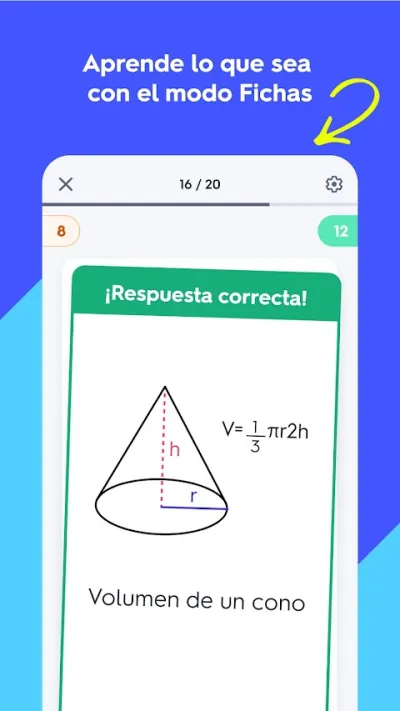
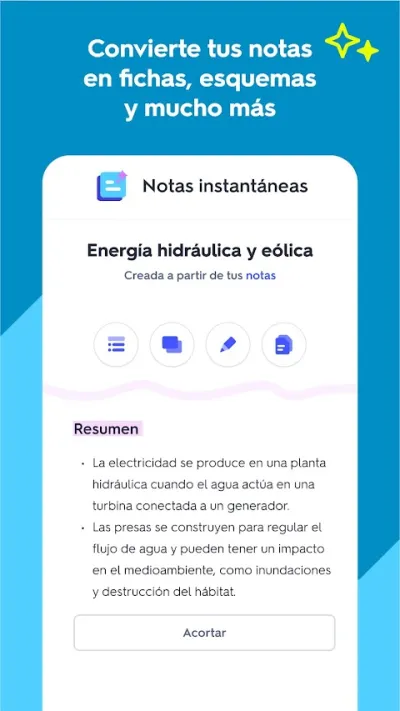
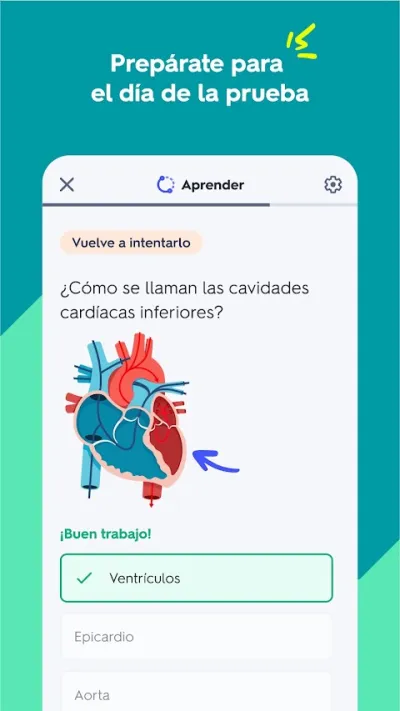
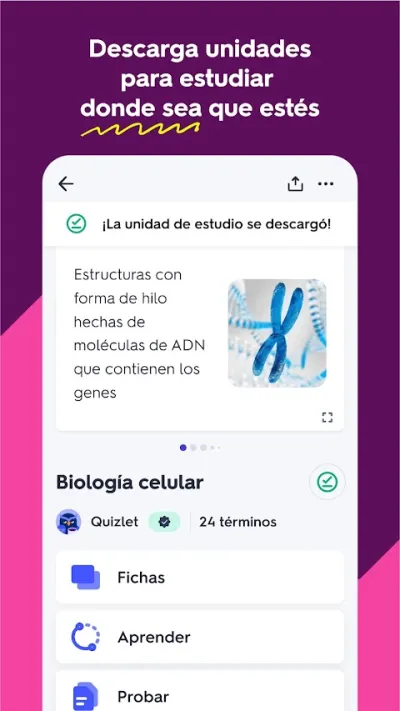
Quizlet is Anki for people who do not want to wrestle with Anki: you create or download sets of flashcards and study them in several modes, from classic review to quizzes and games. Its public library is vast, with material already prepared for almost any subject or official exam.
Pros
- Millions of ready-made flashcard sets
- Several study modes, including quizzes and games
- Modern interface, very easy to use
Cons
- Features have gradually moved to the paid plan
- The quality of public material is uneven
- Spaced repetition is paid

Knowunity: apuntes y tutor IA
Free (with purchases) · 10M+
Best community
4.5
124K reviews
TopApps analysis
Notes written by other students on your own course, with an AI tutor on top.
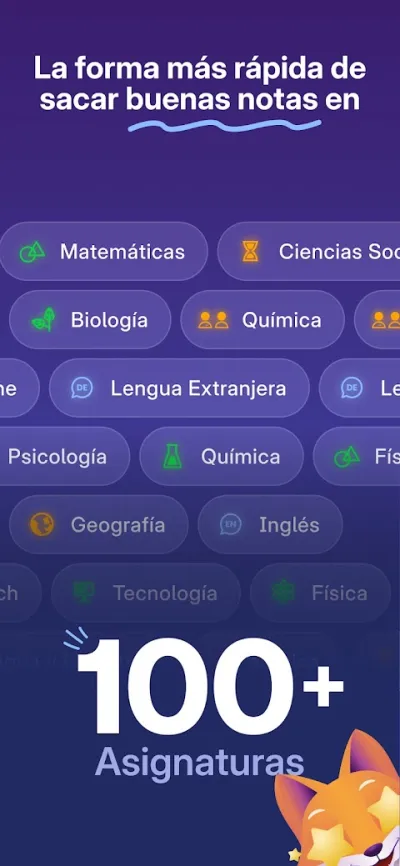
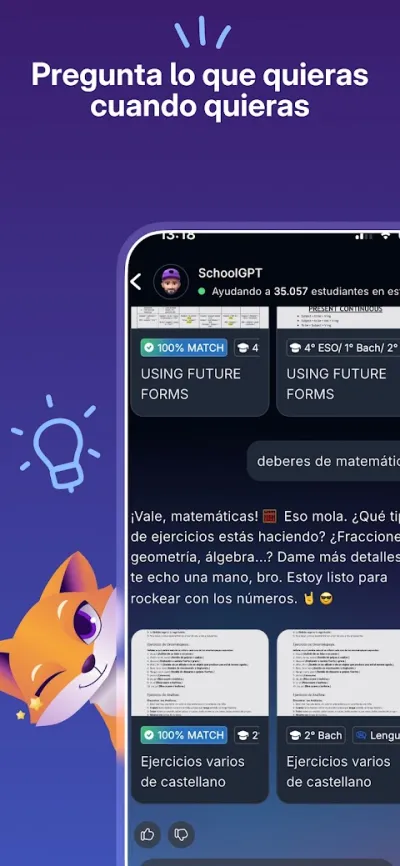
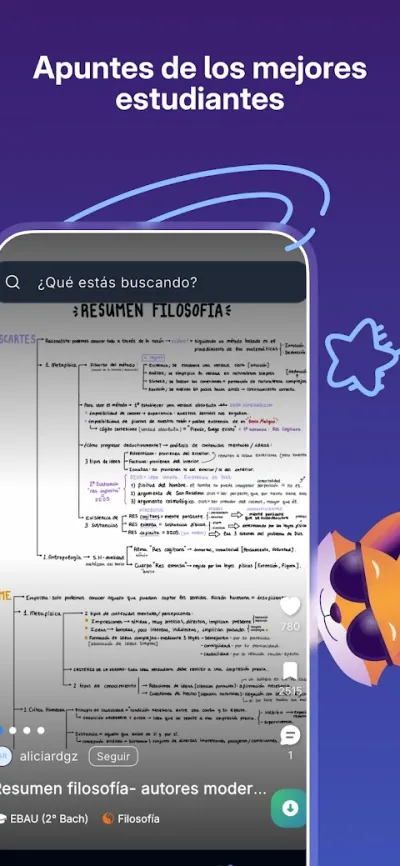
Knowunity mixes two things: a library of notes shared by other students and an AI tutor that answers questions about them. It is the only one on the list where the material was written by someone who took your same subject, which explains how well it fits European syllabuses, although coverage of the Spanish curriculum is uneven.
Pros
- Real notes from other students, not generic material
- AI tutor that answers questions about the material
- Generates practice exams and flashcards
Cons
- Coverage of the Spanish syllabus is patchy
- Note quality depends on who uploaded them
- A social side that gets distracting
Frequently asked questions
Which app summarises my own notes best?
Gemini Notebook, by some distance. You upload the PDFs, the documents or even class recordings and it works only with that material, citing the page each statement comes from. That avoids the main problem of using a general chatbot to study: mixing your syllabus with information off the internet that your teacher never covered.
Is using AI to study cheating?
It depends entirely on how you use it. Asking it to summarise your notes, generate exam questions or explain a concept you do not understand is studying with a tool. Copying the answer to a problem and handing it in without understanding it is something else, and it shows in the exam. Gauth and Photomath explain the working precisely so they serve the first purpose.
Are these apps free?
All five have a free tier and all five push towards a subscription. Gemini Notebook is the most generous: free with a wide limit. Quizlet lets you create and study flashcards without paying. Gauth and Photomath restrict the detailed explanations to the paid plan, which is exactly the part that adds value.
Do they work with the Spanish curriculum?
Photomath, Gauth and Quizlet work with any syllabus because they operate on what you give them. Gemini Notebook likewise, since it only uses your documents. Knowunity depends on other students having uploaded notes for your subject, and its coverage of the Spanish curriculum is uneven: very good in some subjects and almost empty in others.
Articles you might like


The 5 Best Apps to Learn Spanish in 2026
We compare the 5 best apps to learn Spanish: Duolingo, Babbel, Busuu, Memrise and SpanishDictionary.com. Courses, vocabulary, grammar and native speakers.


The 4 Best Mushroom Identification Apps in Spain in 2026
The 4 best mushroom identification apps in Spain: MushTool, Picture Mushroom, Fungipedia and Cotos de Setas. Guides, photo ID, permits and what no app can do.


The 4 Best Apps to Learn Catalan in 2026
We compare the 4 best apps to learn Catalan: Duolingo, Mondly, LinGo Play and Bilinguae. Courses, vocabulary and what each one is missing.
The 4 Best Language Learning Apps in 2026
We compare the best language learning apps: Duolingo (gamified), Babbel (conversation), Busuu (native speakers) and Memrise (real videos).
The 4 Best Apps to Learn English in 2026
We compare the best apps to learn English: Duolingo, Babbel, Busuu and Memrise. From scratch or to improve, with conversation, grammar and vocabulary.
The 5 Best Apps to Learn French in 2026
We compare the best apps to learn French: Babbel, Duolingo, Busuu, Mondly and Drops. Which one to pick based on your level and the time you have.